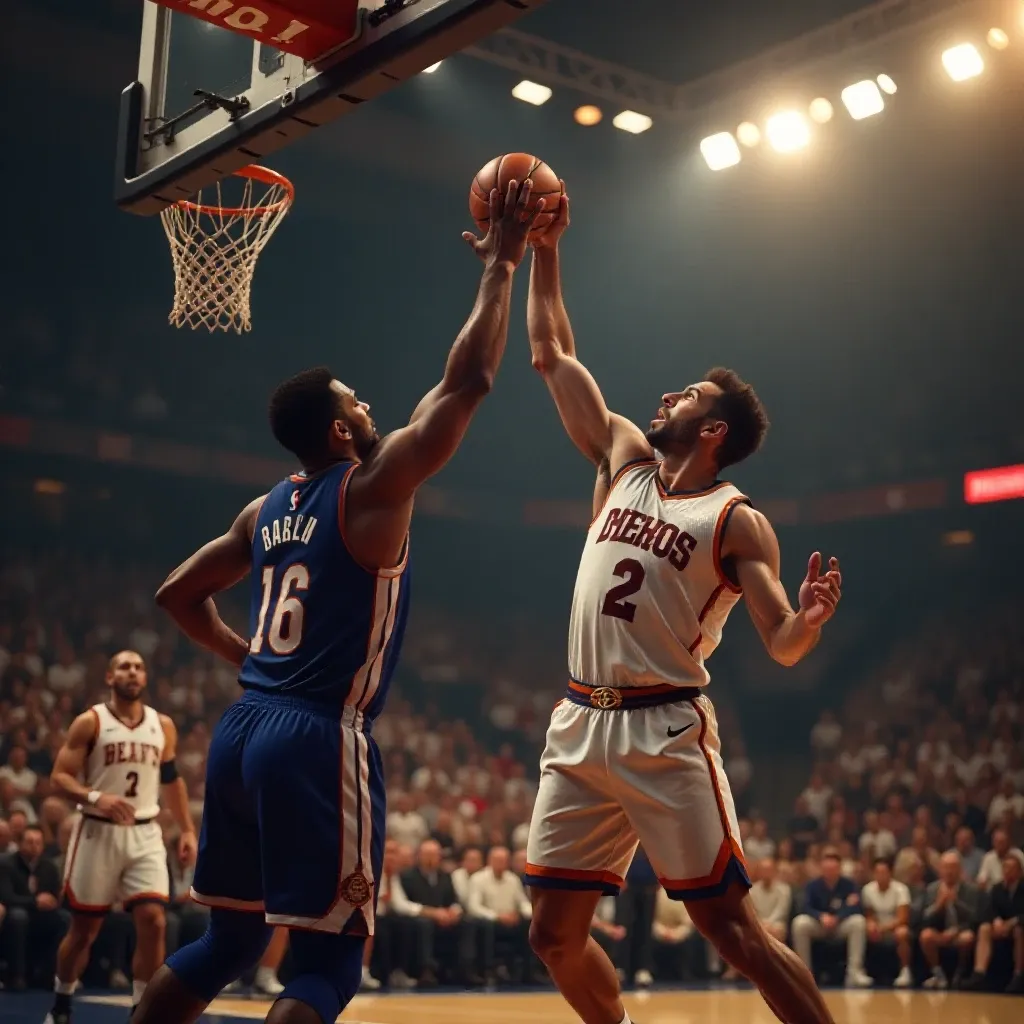
The buzzer sounds, the crowd roars, and a single shot hangs in the air – this is the electrifying realm of last-second goals and game-winning shots. Think of the 2016 NBA Finals, Game 7. Kyrie Irving’s step-back three over Steph Curry. That shot didn’t just win a championship; it became a moment etched in sports history, a testament to the human capacity to perform under immense pressure.
As a sports performance analyst with over a decade of experience consulting with professional athletes and teams across various disciplines – from optimizing performance strategies for national soccer teams to developing mental resilience programs for Olympic swimmers – I’ve witnessed firsthand the intricate dynamics at play in these clutch moments. We are going to delve into the fascinating psychology behind thriving under pressure, explore tactical adjustments that create last-second opportunities, examine targeted training techniques that sharpen reflexes and decision-making, and dissect unforgettable examples of game-winning heroics across different sports.
But what truly separates those who crumble from those who conquer in these do-or-die scenarios? What are the secrets to consistently delivering when everything is on the line? Keep reading, and let’s find out.
The Psychology of the Clutch
Understanding Pressure and Anxiety
Pressure and anxiety are the arch-enemies of clutch performance. Picture this: it’s the final seconds, the score is tied, and all eyes are on you. That’s pressure, a spotlight so intense it can either illuminate or incinerate. Anxiety, its shadowy accomplice, creeps in, whispering doubts and fueling the fear of failure. The Yerkes-Dodson Law suggests there’s an optimal level of arousal for peak performance, but step over that line, and you plummet into a pit of performance anxiety.
The body betrays you first: heart hammering, palms sweating, muscles coiled tight. Then, the mind joins the mutiny, swarming with negative thoughts. This is the anatomy of “choking,” a phenomenon where skill deserts you when you need it most. I’ve been there, feeling the weight of expectation crushing my confidence. But, I learned to fight back. Simple tactics like deep breathing – inhaling for four, holding for four, exhaling for six – can short-circuit the anxiety spiral. Meditation, even for a few minutes, helps center the mind. Recognizing these symptoms in real-time is the first step to regaining control and attempting to get out of that pressure.
Cultivating Mental Toughness
Mental toughness is the unwavering bedrock upon which clutch performance is built. It’s the ability to stare down adversity, to shrug off mistakes, and to maintain unwavering focus when the stakes are highest. It’s about being confident, resilient, and emotionally in control, even when your legs feel like lead and your mind is screaming at you to quit.
Self-belief is the cornerstone of mental toughness. It’s not arrogance; it’s a deep-seated conviction in your abilities, honed through preparation and experience. Positive self-talk is the fuel that keeps the engine running. Instead of “I can’t,” it’s “I can, and I will.” Developing a growth mindset is also key. Embracing challenges as opportunities to learn and grow, rather than threats to your ego, transforms pressure into a catalyst for improvement. Failures are inevitable, but they’re not fatal. They’re lessons in disguise. I look up to people like Michael Jordan, not just for his legendary clutch shots, but for his relentless pursuit of perfection, his willingness to fail publicly, and his unwavering belief in himself, even when the world doubted him. His mental fortitude, resilience and ability to bounce back stronger after setbacks inspires. He is not the only one, tough. Learning to cultivate such mindset is what will allow you to show your true potential.
Memorable Last-Second Wins
Sports history is filled with moments of sheer brilliance and heart-stopping drama, but few resonate as deeply as last-second wins. These are the plays that defy expectations, etch themselves into our memories, and become the stuff of legend. Analyzing these clutch moments reveals not just athletic prowess, but also the intricate interplay of tactics, individual brilliance, and unwavering mental fortitude.
One such example is the “Miracle on Ice” at the 1980 Winter Olympics. The underdog United States hockey team, comprised of college players and amateurs, faced off against the seemingly invincible Soviet Union team, who had dominated international hockey for decades. Trailing 3-2 in the final period, the US team tied the game with just over three minutes remaining. Then, with only 10 seconds left on the clock, Captain Mike Eruzione fired a shot that found the back of the net. The arena erupted, and the US team held on for the improbable victory. This win was more than just a hockey game; it symbolized American resilience and the triumph of the underdog against overwhelming odds. The key factors were the relentless pressure applied by the US team in the final minutes and the psychological impact of their never-say-die attitude on the seemingly invincible Soviets. Coach Herb Brooks instilled a belief in his players that anything was possible, and that mental toughness proved to be difference.
Another iconic last-second victory occurred in Game 6 of the 1998 NBA Finals. The Utah Jazz were hosting the Chicago Bulls. With the Bulls leading the series 3-2, and the game tied at 86, Michael Jordan, arguably the greatest basketball player of all time, delivered one of the most iconic shots in NBA history. Stealing the ball from Karl Malone, Jordan dribbled up court, crossed over Bryon Russell, and elevated for a jump shot with just 5.2 seconds remaining. The shot swished through the net, sealing the Bulls’ victory and their sixth NBA championship in eight years. The play epitomized Jordan’s unparalleled skill and unwavering confidence in pressure situations. The circumstances surrounding the game and the series elevated this moment to legendary status. Jordan was battling flu-like symptoms, and the Jazz were desperate to force a Game 7. Jordan’s shot was a testament to his will to win and his ability to perform at his best when it mattered most.
These last-second wins transcend their respective sports. They offer a reminder that in the face of adversity, anything is possible. They are the embodiment of hope, determination, and the human spirit’s ability to overcome seemingly insurmountable obstacles. They are the moments that keep us on the edge of our seats, cheering for the improbable, and believing in the magic of sports.
Tactical Approaches to Creating Late-Game Opportunities
The final minutes of any contest are where legends are made, and championships are won. A team’s ability to seize late-game opportunities hinges on a blend of strategic foresight and tactical flexibility. This involves not only offensive firepower but also defensive resilience and shrewd game management. Adapting to the pressure cooker environment requires a calm demeanor, a clear plan, and the ability to execute under duress.
Maximizing Set Plays and Quick Hitters
In the waning moments, offenses often turn to the reliability of set plays and the explosiveness of quick hitters. Effective set plays are characterized by their meticulous design, creating clear passing lanes, and exploiting defensive vulnerabilities. Quick hitters, on the other hand, rely on speed and deception to catch the defense off guard. Successful execution involves a team’s ability to read the defense, anticipate movements, and react decisively. Variations and adaptations are crucial, tailoring plays to exploit opponent tendencies revealed throughout the game.
Defensive Strategies for Protecting the Lead
Protecting a late-game lead demands a disciplined and adaptable defensive approach. Zone defenses, with their emphasis on protecting the paint and forcing outside shots, can be effective in limiting high-percentage opportunities. Man-to-man defense, while requiring greater individual effort, allows for tighter coverage of key players. The strategic use of fouling, while controversial, can disrupt the opponent’s rhythm and force them to earn points at the free-throw line. The choice of defensive strategy hinges on the team’s personnel, the opponent’s strengths, and the game situation. Ultimately, a successful late-game defense is one that minimizes mistakes, contests every shot, and forces turnovers.
Training for the Moment
The ability to perform under pressure, especially when the game hangs in the balance, separates good players from great ones. It’s not just about physical skill; it’s about mental fortitude and the ability to execute honed skills in the face of immense stress. Preparing for these last-second scenarios requires a dedicated approach that combines intense physical training with rigorous mental conditioning.
Pressure training is a cornerstone of this preparation. Simulation drills designed to replicate the chaotic atmosphere of a last-second play are invaluable. For example, basketball players might practice game-winning shots with the clock winding down, while the coach yells simulated crowd noise and simulates defensive pressure. Football quarterbacks could run two-minute drills repeatedly, focusing on quick reads and accurate throws under duress. The key is to create an environment that mimics the stress and fatigue of a real game.
Mental rehearsal is equally important. This involves visualizing successful execution of plays in high-pressure situations. Athletes can mentally walk through the steps of a game-winning shot, a crucial pass, or a game-saving tackle, focusing on the feel of the movement and the outcome desired. Regular mental rehearsal builds confidence and reduces anxiety when the actual moment arrives.
Skill development must be tailored to critical moments. Shooting accuracy can be improved through countless repetitions under pressure from teammates. Passing precision can be honed with drills that emphasize quick decisions and accurate delivery while fatigue is also playing a role. Decision-making can be sharpened by studying game film and analyzing past performance in similar situations, learning from both successes and failures. Coaches should create scenarios where players are forced to make split-second choices with consequences, encouraging both reactive and proactive thinking.
Data’s Role In Finding Opportunities
In the high-stakes world of competitive sports, the final minutes can be a whirlwind of desperation and last-ditch efforts. However, the truly successful teams are the ones who have laid the groundwork for late-game opportunities long before the clock starts winding down. This groundwork is built on a foundation of diligent data analysis.
Data analysis offers a vital window into opponent weaknesses often hidden beneath the surface. By meticulously dissecting game footage, player statistics, and historical performance data, analysts can pinpoint vulnerabilities in defensive formations, identify fatigue patterns in key players, or uncover predictable offensive tendencies. This level of granular detail provides coaches and players with actionable insights, enabling them to tailor strategies specifically designed to exploit these weaknesses when the pressure is on.
Advanced metrics like Expected Goals (xG) and Win Probability add another layer of sophistication to this data-driven approach. xG quantifies the likelihood of a shot resulting in a goal, taking into account factors such as shot angle, distance, and pressure from defenders. By analyzing xG data, teams can identify high-value scoring opportunities and refine their offensive tactics to maximize their chances of converting those opportunities into actual goals. Win Probability, on the other hand, dynamically assesses a team’s chances of winning throughout the game, based on the current score, time remaining, and other relevant variables. This allows teams to make informed decisions about when to press for a goal, when to adopt a more defensive posture, and how to manage risk in the critical final stages.
Beyond individual game analysis, identifying broader trends and patterns across multiple games can provide a crucial edge. Are opponents consistently struggling to defend against crosses from a particular area of the field? Are they prone to making errors when pressed high up the pitch? By recognizing these patterns, teams can proactively adjust their strategies, anticipate their opponent’s reactions, and create situations that increase their likelihood of success in those crucial late-game moments. The key is to then translate data into actionable strategies. This might involve adjusting player positioning, modifying set-piece routines, or implementing specific tactical changes designed to exploit the identified vulnerabilities at the opportune moment. This proactive approach, fueled by data, is what separates teams that merely hope for late-game success from those who engineer it.
Conclusion
Mastering last-second goals and game-winning shots is a blend of psychological resilience, tactical acumen, and rigorous training. The ability to remain calm under pressure, visualize success, and execute flawlessly are hallmarks of a clutch performer. Mental toughness, honed through consistent practice and self-belief, is the bedrock upon which these skills are built.
Embrace these strategies in your own training regimen. Cultivate a mindset of unwavering confidence, and relentlessly practice the techniques that will allow you to seize those critical moments. Remember, the power to achieve the extraordinary resides within you. Believe in your capabilities, trust your instincts, and when the opportunity arises, take the shot. Your moment awaits. Go out there and make it happen!